

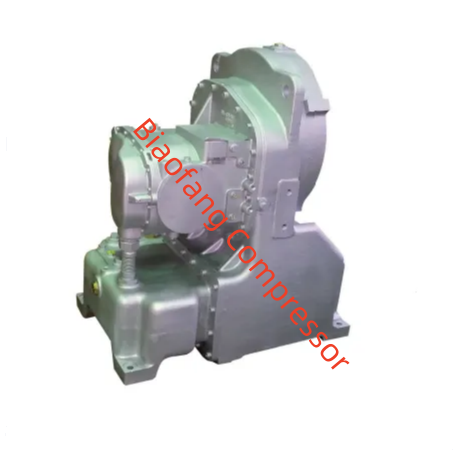
The Ingersoll Rand CD4D VSD GHH RAND Air End is a double-stage, gear-driven, oil-free screw compressor block that adds variable-speed drive capability to the proven CD4D core. It delivers totally oil-free compression with the added ability to match output to demand, and it can be supplied with DIN 10204 material certification on request — a combination that suits facilities where both air purity and documented traceability matter.
The pattern I see across regulated industries is consistent: buyers need clean air, and increasingly they need paperwork to prove what they are installing. A block that pairs oil-free compression with optional material certification removes two headaches at once. This guide explains what the Ingersoll Rand CD4D VSD GHH RAND Air End is, how the VSD element changes its behavior, and where it earns its keep.
What the CD4D VSD Air End Is
An air end is the rotating compression core of a screw compressor — the sealed element where two interlocking rotors squeeze air to working pressure. In the CD4D VSD, compression happens in two stages, which shares the thermal load and improves efficiency at higher pressure. The "VSD" designation means the block is matched to a variable-speed drive, so its speed — and therefore its output — can be varied to follow demand instead of running flat out.
GHH RAND is the German airend specialist whose cores sit inside many Ingersoll Rand machines. When a block carries the GHH RAND designation, it signals a core engineered to a tight, repeatable standard — something that matters when you are matching a replacement element to an existing compressor or building a system that will be audited.
Quick take: the Ingersoll Rand CD4D VSD GHH RAND Air End is a double-stage, gear-driven, oil-free screw block with variable-speed drive capability and optional DIN 10204 material certification.
Key Features of the Ingersoll Rand CD4D VSD GHH RAND Air End
Five design choices define this block, and each one maps to a real operating need:
- Double-stage compression. Air is compressed in two sequential stages, lowering thermal load per stage and improving efficiency at higher pressure.
- Variable-speed drive (VSD). Output follows demand, so the machine avoids the energy waste of running at full speed against a partial load.
- Totally oil-free. No lubricant enters the compression chamber, so the delivered air stays clean from inlet to discharge.
- DIN 10204 certification available. Material certification, including w3.1, can be supplied on demand for traceability-sensitive projects.
- Lost foam cast finish. The housing benefits from a lost foam casting process that delivers an accurate, high-quality surface finish.
The DIN 10204 option is worth underlining, because it is the feature that separates this block from a commodity core. In oil and gas, chemical, pharmaceutical, and power projects, buyers often cannot accept a pressure-containing or rotating component without a material test certificate. The Ingersoll Rand CD4D VSD GHH RAND Air End can be supplied with that documentation, which keeps a project moving instead of stalling at the compliance gate.
Where the CD4D VSD Air End Is Used
The CD4D VSD earns its place in facilities where air purity, energy efficiency, and traceability overlap. The installations I see it in most often include:
- Food and beverage processing, where oil-free air touches product or packaging
- Pharmaceutical and medical manufacturing with strict purity and documentation requirements
- Electronics and clean-room assembly, where trace oil ruins sensitive surfaces
- Regulated projects that require material certification on supplied components
If your operation ticks any of these boxes, the Ingersoll Rand CD4D VSD GHH RAND Air End belongs on your shortlist. You can see how it sits within the wider line on our oil-free rotary screw compressor category page.
How VSD Changes the Way a Block Behaves
A fixed-speed compressor runs at one speed and modulates its output by loading and unloading, which wastes energy when demand is partial. A variable-speed machine instead slows the drive down to match actual air demand, so the airend only produces what the plant needs. That translates into lower energy draw during partial-load periods, softer starts that reduce mechanical stress, and steadier system pressure.
The double-stage architecture complements the VSD nicely. Two-stage compression keeps discharge temperatures lower, and combined with variable speed, the Ingersoll Rand CD4D VSD GHH RAND Air End runs efficiently across a broad operating band rather than only at a single design point. For a plant with fluctuating demand, that is where the energy savings show up.
How to Specify the Correct CD4D VSD Replacement
Buying an airend is about matching the core to the machine frame and duty cycle, not picking the first part number that looks close. Confirm the exact CD4D VSD designation, verify the part number engraved on the existing block, and note whether your application requires material certification. The Ingersoll Rand CD4D VSD GHH RAND Air End is a specific block, and the fastest route to a correct quote is to send us your machine nameplate and existing part number together.
If certification is part of your requirement, say so up front. It is far easier to arrange DIN 10204 documentation at the quoting stage than to retrofit paperwork after the block has shipped, and mentioning it early keeps the lead time accurate.
Keeping a CD4D VSD Air End Reliable
A compression block only performs as well as the system around it. The plants where I have watched oil-free airends reach and exceed their expected life share a few consistent habits: keep inlet filtration clean so abrasive particles cannot wear the rotors, maintain the cooling circuit because heat is the biggest enemy of an oil-free core, and track temperature, pressure, and energy draw over time instead of waiting for a hard failure.
- Replace inlet and separator filters on schedule, not on memory
- Keep coolers and ventilation clear so discharge temperatures stay low
- Log pressure, temperature, and speed so trends are visible at a glance
- Use genuine seals, gears, and filters whenever the block is serviced
On a variable-speed machine, add one more habit: watch how the drive behaves at partial load. If the block is spending long periods at a single narrow speed or cycling more often than it should, that is a signal worth investigating before it becomes a reliability problem. A documented baseline makes those slow shifts visible long before they turn into an unplanned shutdown.
When to Replace Your CD4D VSD Air End
No airend lasts forever, and catching the warning signs early is the difference between a planned swap and an emergency shutdown. Watch for a measurable drop in delivered pressure or flow at the same speed, rising discharge temperature or frequent thermal trips, unusual noise or vibration, and increased energy draw for the same output. In an oil-free block, wear cannot hide behind an oil change — it shows up in performance, which is a useful early-warning system if you are paying attention.
Why Source Your CD4D VSD from Biaofang
When you are buying a replacement compression core, the supplier matters as much as the part number. Here is what we bring to the table at Biaofang:
Genuine GHH RAND cores. We supply the Ingersoll Rand CD4D VSD GHH RAND Air End as a proper replacement element, not a look-alike copy.
Certification on request. DIN 10204 material certification, including w3.1, can be arranged to match your project requirements.
Stated warranty. The CD4D VSD block carries a 1–2 year warranty, so you are not buying blind.
Wide air-end range. The CD4D VSD is one of many Ingersoll Rand GHH RAND elements we carry — see the full lineup on our Ingersoll Rand GHH RAND category page.
Frequently Asked Questions
Is the CD4D VSD a direct replacement for my Ingersoll Rand machine?
Fitment depends on your machine frame and original part number. The Ingersoll Rand CD4D VSD GHH RAND Air End replaces the corresponding CD4D VSD-designated block; send us your nameplate and existing part number and we will confirm the exact match before you order.
What does "VSD" mean and why does it matter?
VSD stands for variable-speed drive. It lets the compressor match output to actual air demand instead of running flat out, which reduces energy draw at partial load and softens starts. For a plant with fluctuating demand, that is where most of the energy savings come from.
Can I get material certification for this block?
Yes. DIN 10204 material certification, including w3.1, is available on demand. Mention it at the quoting stage so the documentation can be arranged alongside the block rather than added later.
How long will the CD4D VSD air end last?
Service life depends on duty cycle, ambient conditions, and maintenance discipline. A well-maintained oil-free core running within its rated duty will deliver years of reliable service; the block itself carries a 1–2 year warranty.
Need a Genuine Ingersoll Rand CD4D VSD GHH RAND Air End?
Send us your machine nameplate and current part number, and we will confirm fitment, certification options, and lead time for a genuine replacement block.
Confirm My CD4D VSD Fitment